
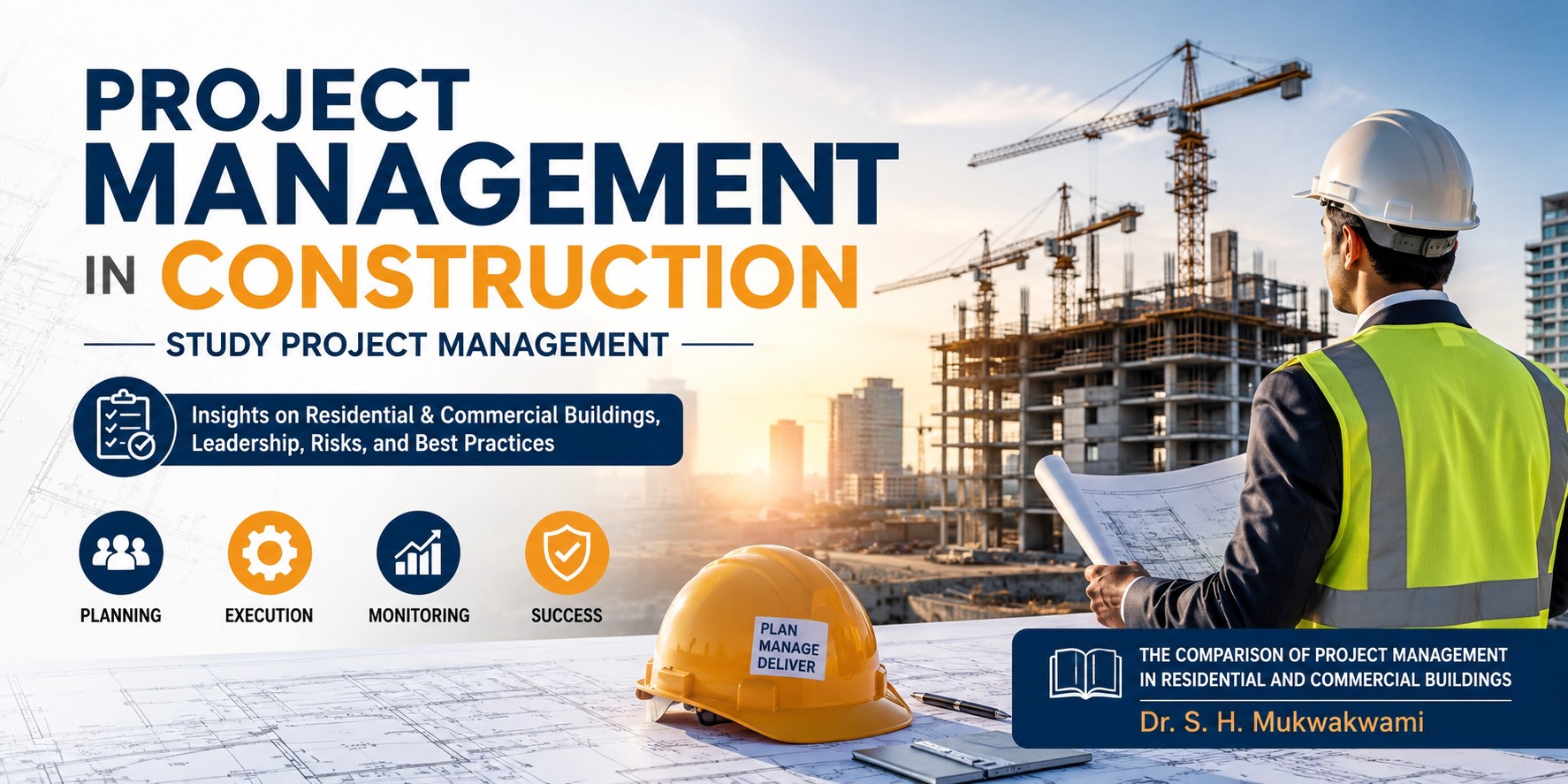
Project management in construction is one of the fundamental pillars for ensuring the success of any project, whether residential, industrial, or commercial. As we study project management, we extricate that proper planning, along with constant monitoring, can make the difference between a project delivered on time and within budget, and one that suffers significant delays and cost overruns.
A Deep Dive Into Project Management Differences
In “The Comparison Of Project Management In Residential And Commercial Buildings,” Dr. S. H. Mukwakwami provides an insightful look at the difference in project management in residential and commercial buildings. In this book, the author discusses aspects such as leadership, risk management, operations, ethics, and sustainability, noting that there is more formality in commercial buildings where there is PRINCE2, CSCS, and other forms of structured planning and leadership. However, the author goes beyond the discussion to include his personal experience as a leader and an advocate for small businesses in Zimbabwe. He mentions his personal involvement with informal traders as well as negotiating for their rights to trade legally, hence the development of communities and ethical leadership.
The Importance Of Effective Project Management In Construction
Efficient project management in construction is fundamental for the execution of projects of any type and complexity. In an environment characterized by constant change, tight budgets, limited timelines, and technological advancements, careful coordination and supervision of every aspect of the project play a key role.
From planning to project completion, well-developed management is crucial to ensuring that established objectives are met, whether in terms of budget, time, or quality.
Author’s Perspective: Leadership Beyond Construction
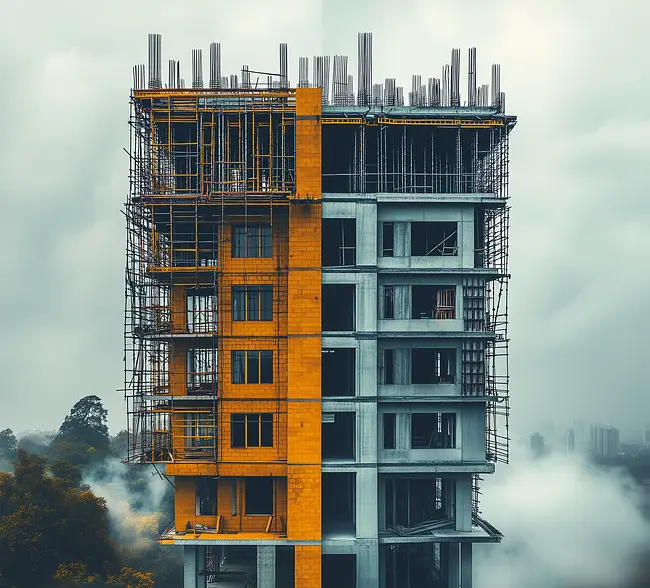
In “The Comparison Of Project Management In Residential And Commercial Buildings,” Dr. S H Mukwakwami sheds light on the various and numerous challenges you may face in project management and how to achieve highly efficient results.
Facing the Hurdles: Key Challenges in Construction Project Management
Projects tend to be traditional in nature, following a fixed sequence of activities. For example, a property cannot be built without first completing its foundation.
Similarly, attention must be paid to project specifications and safety during construction to ensure its successful completion. However, what makes these projects special is the number of different people who must collaborate, sometimes across multiple roles.
Likewise, the project manager involves clients, site managers, architects, engineers, and others. Among the challenges they face are:
Communication
Clear communication is key to managing truly successful projects. Coordination is more complex in this sector than in other projects due to the number of stakeholders involved. However, maintaining assertive communication can lead to effective results.
Deadlines and Dependencies
Most projects have a clear completion deadline, so individual activities must also be executed on specific dates. This is a fundamental factor in construction project management because many activities are interdependent. Therefore, a delay can jeopardize the entire project.
Scope
Even the smallest projects tend to be quite extensive and take longer to complete. However, large projects are carried out over several years. Therefore, planning can be more complex and requires the project manager to think about the next steps weeks and months in advance.
Risks
Due to the long execution phase, construction projects are associated with significant risks, which must be considered in the planning from the outset. These range from potential price increases to the cancellation of contracts by major suppliers. For this reason, good risk management is key.
Project Costs
Besides project completion, project costs are key to determining whether a construction project can be carried out successfully. However, due to the importance of the project and the long execution phase, cost control can always be complicated.
Permits and Regulations
It is important to obtain the necessary permits and fully comply with construction regulations. Especially when a project is behind schedule, there may be a temptation to disregard the points described above. However, this is not recommended, because failures in these areas can cause the project to halt completely.
Resource Shortages
In construction projects, a shortage of skilled labor, or a very limited number of workers, can create problems, preventing the project from being completed within the established timeframe. However, a shortage of essential materials, equipment, or machinery has serious consequences for project progress.
Quality Matters: Why Management Makes the Difference
Quality management in construction projects is key to minimizing defects in the final product, which can lead to breakdowns, the need for rework, accidents, and all sorts of complications that can negatively impact the final result and the client experience.
The main tools to consider for implementing quality construction project management are quality protocols or verification protocols.
Quality management involves important advantages for any company or sector, such as eliminating losses associated with the repetition and return of defective products, improving the technical performance of the items, allowing savings in superfluous expenses, and the efficiency of each of the processes.
Striving for Excellence: The Value of Top-Tier Project Management
Project management in construction is an essential process that focuses on planning, organizing, coordinating, and controlling the resources and activities necessary to complete a construction project. Project management in construction is crucial due to the complexity and high cost of construction projects, as well as the large number of stakeholders involved. In this article, we will explore the importance of project management in construction, its main phases, and the benefits it offers.
Project management in construction is important for several reasons, including:
- It helps ensure that project objectives are met within the established budget and timeframe.
- It helps ensure worker safety and construction quality.
- It helps reduce the risk of litigation and legal issues.
- It helps ensure customer satisfaction and project delivery according to their needs.
Breaking It Down: The Main Phases of Project Management in Construction
Project management in construction involves several key phases, including:
- Planning Phase: In this phase, the project’s objectives and scope are defined, a detailed work plan is developed, the necessary resources are identified, and a budget and schedule are established.
- Execution Phase: In this phase, the project activities are carried out as planned, progress is monitored, and resources are managed to ensure that the project objectives are met.
- Monitoring and Control Phase: In this phase, project progress is monitored, adjustments are made if necessary, and corrective action is taken to address any deviations from the original plan.
- Closing Phase: In this phase, all project activities are finalized, performance is evaluated, and the results are delivered to the client.
The Payoff: Benefits of Stellar Project Management in Construction
Project management in construction offers several benefits, including:
- Improved efficiency and effectiveness of construction projects.
- Reduction in project time and cost.
- It helps ensure quality and safety in construction.
- It helps ensure customer satisfaction and the delivery of the project according to their needs.
Project management in construction indubitably helps ensure the success of construction projects. it involves several key phases, from planning to project closure, and offers several benefits, such as improving project efficiency and effectiveness, reducing project time and cost, and ensuring customer satisfaction and project delivery according to their needs.
Final Thoughts:
A Comparative Lens on Project Management
In conclusion, this book on project management in construction presents an insightful comparison of project management in residential and commercial buildings through structured planning and leadership.
If you’re interested in practical insights and real-world headship from a highly qualified industry voice, consider exploring Dr. Mukwakwami’s book to study project management today!